Spotlight on LLMEs – A level professional development
Hear from maths teacher Adam Creen on what it’s like to lead A level professional development and subject communities for North-East Hants and Surrey Maths Hub
29/01/2026
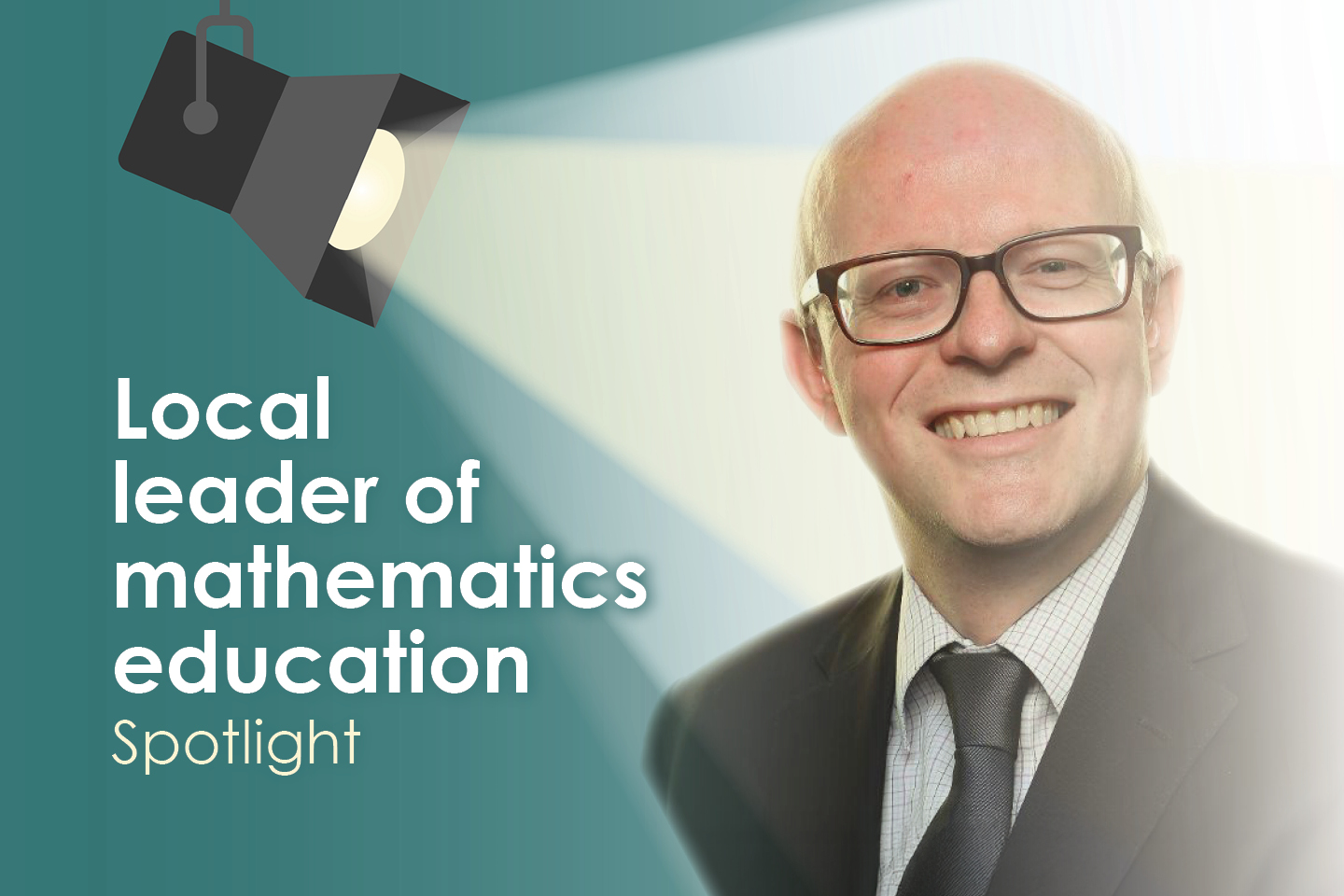
Local leaders of mathematics education (LLMEs) are the experienced teachers who lead Maths Hubs professional development at a local level. They are experts in maths teaching and professional development, bringing together a knowledge of their local context with an understanding of the national picture of maths teaching.
Any great teacher with a passion for developing others has the potential to become an LLME, and recruitment for new LLMEs is now open (see our news item for more information; the application window closes on 23 April 2026).
In our ‘Spotlights’ series, we speak to LLMEs across the country, in all phases, to learn more.
Adam Creen is an LLME, leading A level professional development for teachers and subject leaders with North-East Hants and Surrey (NEHS) Maths Hub. He has worked with the hub since it launched in 2014, having been part of the group of schools that helped set it up.
How did you first get involved with the Maths Hubs Programme?
Prior to the Maths Hub being set up, I worked with local secondary schools upskilling teachers from other disciplines to be able to teach KS3 and KS4 maths. My main activity with the hub started with the new A level specifications in 2017. I ran training in other schools’ departmental meetings, led Work Groups on the new mechanics and statistics topics and organised KS5 coordinator meetings to share resources. To become accredited to lead this activity, the hub encouraged me to become an NCETM PD Lead, which required a year’s training and was some of the best CPD I have ever had.
What does your Work Group activity involve?
This year I am leading two pieces of work.
Developing A Level Pedagogy is about effecting change in the work of at least six schools and colleges, through meeting with teachers who are driving improvements in their own schools. We gather evidence on how their own professional learning develops as I run sessions on mastery, oracy, and the overarching themes of A level Maths. We also examine how their classroom practice and departmental policies develop using the resources they implement. Most importantly, we look at the impact on the students and how it improves their experience and their confidence in the subject.
This year we have also set up a Post-16 Maths Subject Leaders Community, similar to the Secondary Maths Subject Leaders Community. It takes the form of half-termly network meetings, which are a direct continuation of the AMSP Network Meetings I had hosted at my school for several years. Heads of department and KS5 coordinators meet online and face-to-face to discuss issues such as recruiting students, working with students from disadvantaged backgrounds, developing the use of technology – anything that the participants feel they need some support with. An ongoing focus is training new KS5 coordinators, as there is currently no national programme for this. There is always plenty of discussion time and we use the online platform, Basecamp, to share resources and continue our conversations outside the meetings.
How do participants benefit from being part of a Work Group?
Participants are asked to carry out ‘gap tasks’ between our sessions together, i.e., take some of the ideas back into their school or college and try them out in lessons or department meetings. Many of the teachers in my Work Group have become very enthusiastic doing this, and have shared photos, evaluations and student work to show how it has impacted their learning. It’s not an onerous task and, for many, it is giving them the impetus to try things that they wouldn’t normally have thought of doing by themselves. I am always very impressed with their self-reflection and by the end of the year they are in a much better position to continue making changes and improvements.
What do you most enjoy about being a local leader of maths education (LLME)?
Even before the title and role of LLME became formalised, I have always felt valued by the Maths Hub for the work I am able to offer. Being a leader of CPD is a recognition of the huge reach of the Maths Hubs Programme. We have planning meetings and end of year celebrations together and at the Maths Hub Conference we are encouraged to deliver a session on the impact of our work. It feels really good to have that recognition.
How does being an LLME benefit you personally and professionally?
My school values my role and has encouraged me to do as much outreach as I feel able to fit into my timetable. They have protected my time in school, so I am able to plan my sessions effectively. With my status as a PD Lead and an LLME, I’m able to reach out to other local schools, and they can have confidence that the training I am running is both high value and high impact. The funding my school receives for my LLME work is also very welcome!
What’s next for you as an LLME?
Taking a step back from subject leadership in school has enabled me to focus on my classroom teaching and my activities outside the classroom. I plan to continue with my hub activities for as long as they will have me, as well as seeking new opportunities to share resources with post-16 institutions across the UK. There will always be curriculum changes and new technologies that I will be able to help colleagues with and who knows what else will unexpectedly turn up!
Ready to take the next step in your teaching career?
Find out how LLMEs lead Maths Hubs work locally – and how you can develop the expertise to become one.
Discover