Mixed-age mastery in Early Years and Key Stage 1
One small rural coastal primary shares a practical approach to mixed-age maths using flexible teaching and continuous provision
27/01/2026
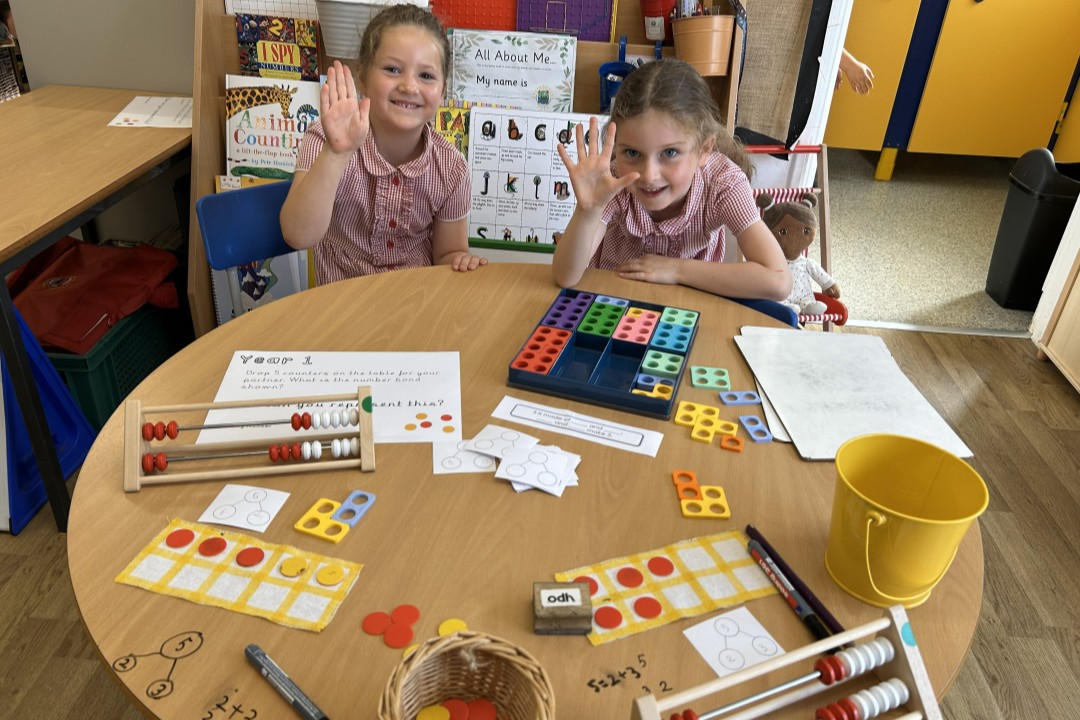
Fylingdales C of E VC Primary School has developed a teaching for mastery approach, flexible lesson design and purposeful provision to support secure foundations in number within a mixed-age classroom. Headteacher Helen Thompson and maths lead Alison Dykes share how this works in practice.
Fylingdales Primary is in Fylingthorpe, a picturesque village nestled above the famous Robin Hood’s Bay in North Yorkshire, which attracts thousands of visitors each year. Its popularity as a tourist destination means there are few younger families locally. Pupil numbers at the school remain small and fluctuate from year to year, with only 54 children currently on roll. Although the school benefits from trust-wide support as part of the Heritage Coast Foundation, with children spanning Reception to Year 2 in a single classroom, leaders were clear that any approach to maths needed to be purposeful, manageable for staff and responsive to children’s needs.
Strong foundations through Maths Hub engagement
The school began its work on teaching for mastery in 2023, when the federation participated in the NCETM’s Mastery Readiness Programme with Yorkshire Ridings Maths Hub. This early engagement helped establish a shared understanding of effective maths teaching and laid the foundations for longer-term change.
For Alison Dykes, the school’s maths lead, this first step was crucial. It allowed the school to slow down, build confidence and put key structures in place before making wider changes. In 2024, Alison began training as a Primary Mastery Specialist, significantly deepening her subject knowledge and strengthening her ability to coach colleagues across the federation.
‘Joining the Mastery Readiness Work Group was the point where everything started to make sense. It helped us build a shared vision for maths and put the right systems in place so we could keep building on that work. Training as a Primary Mastery Specialist has deepened my understanding enormously and given me the tools to support colleagues across the federation. The ongoing support from the Maths Hub and the professional network around it has been invaluable.’
The school’s ongoing relationship with the Maths Hub has remained central, providing high-quality professional development, regular support and access to a wider professional network. This has ensured that staff learning has not been a one-off but is a sustained and evolving part of the school’s improvement work.
Flexible and responsive classroom organisation
One of the most significant shifts in the mixed-age Reception, Year 1 and Year 2 classroom has been a move away from rigid lesson structures. Leaders were clear that lessons do not need to last an hour to be effective.
Maths sessions now vary in length, from as little as five minutes to around 25 minutes, depending on the learning focus, the point in the year and the group being taught. This flexibility has made lessons more focused and purposeful, allowing teachers to respond to children’s needs rather than the clock.
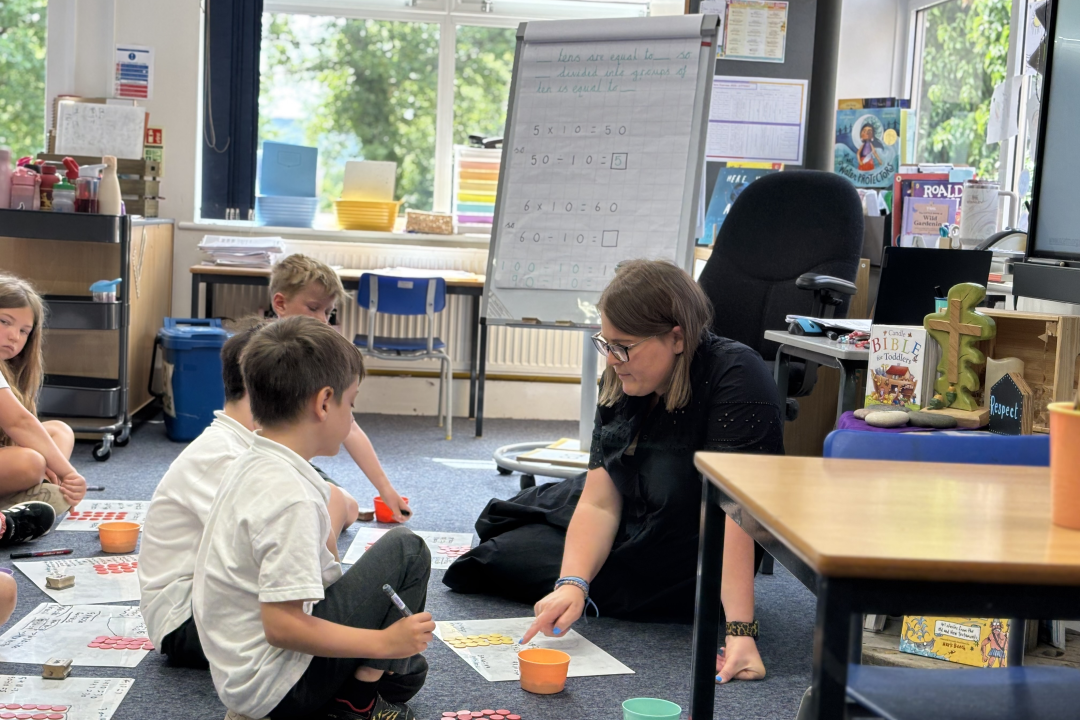
In the mixed-age Reception, Year 1 and Year 2 class, maths is taught through a blend of approaches. The school uses the NCETM Curriculum Prioritisation materials as the main resource, with teachers teaching the core maths curriculum separately for different year groups to ensure progression and clarity. Alongside this, teachers use whole-class warm-ups, small-group teaching, independent tasks and continuous provision where it best supports learning. In KS2, maths is taught primarily as a whole class in mixed-age Years 3 /4 and Years 5/6, using the NCETM Curriculum Prioritisation materials.
Additional adults are carefully trained and deployed to work with focus groups of pupils or within provision, ensuring that support is intentional and closely aligned to the learning. Fylingdales’ headteacher, Helen Thompson, explains:
‘We’ve been really clear with staff that maths doesn’t have to look the same every day. There might not be lots of writing in books, and that’s fine. What matters is children’s understanding and how they’re applying their learning. Sessions can be short, sharp and purposeful, and that flexibility has made a huge difference in a mixed-age class.’
Watch: Leadership insights from headteacher, Helen Thompson
Purposeful use of provision
Continuous provision, the carefully planned resources and routines children can access independently, plays a central role in supporting maths learning in Reception, with provision-style approaches used across the mixed-age EY/KS1 classroom where they best support learning. Rather than being an add-on, provision is carefully designed to link directly to current learning and to encourage children to apply and deepen their understanding independently.
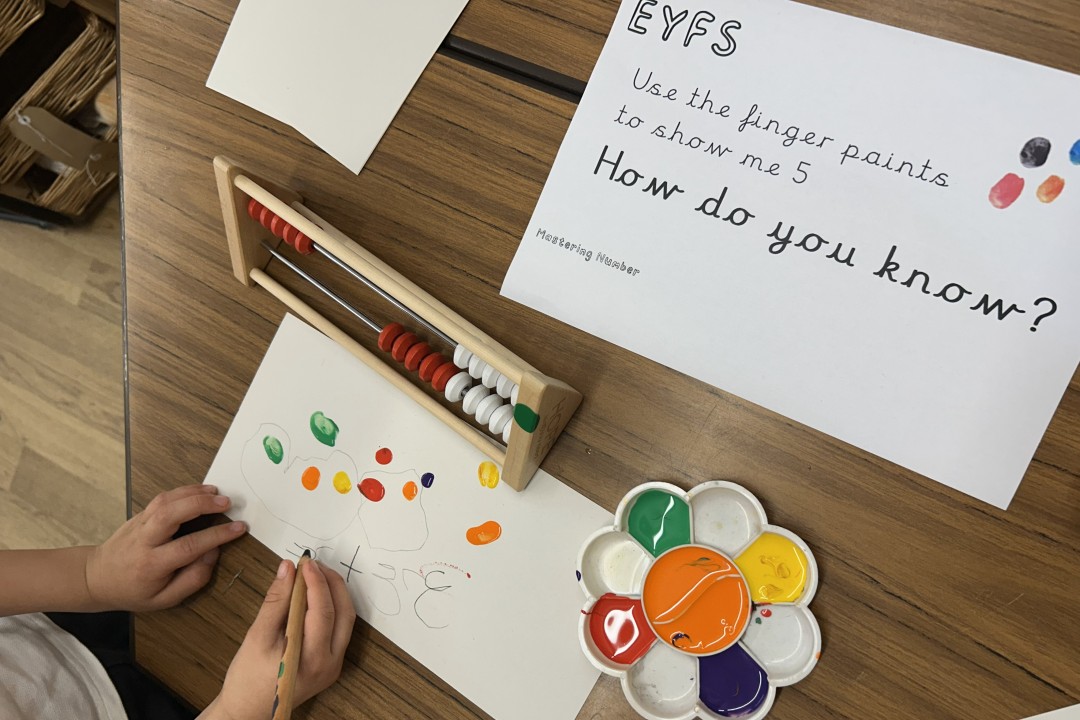
Across the classroom and outdoor spaces, maths is embedded through number games, role play and real-life contexts. One example includes using ten frames to support a chick-hatching countdown, helping children connect number concepts to meaningful experiences.
Teachers and teaching assistants deliberately make time to observe, listen and engage with children’s mathematical thinking within provision. This ensures that mathematical talk is encouraged and misconceptions are addressed as they arise.
‘Provision has become a really powerful part of our maths teaching. It’s not about keeping children busy, it’s about giving them meaningful opportunities to explore, practise and apply what they’ve learned. When adults are tuned in and listening carefully, you hear children using precise mathematical language and explaining their thinking in ways we didn’t see before.’ - Alison Dykes, maths lead
Watch: Mixed-age Reception and Key Stage 1
Mastering Number as a key tool
Fylingdales has opted to use the Mastering Number Programme alongside curriculum materials to strengthen number sense and support secure foundations. Its structure helps children make clear connections between guided teaching sessions and independent work within provision.
By using consistent representations and language, Mastering Number is supporting both conceptual understanding, fluency with number and vocabulary development. Children are increasingly able to articulate their thinking, justify their answers and make links between different areas of maths.
Positive impact on pupils
The impact on pupils has been clear and visible across the EY/KS1 classroom. Children now use precise mathematical language and explain their reasoning with growing confidence. The small-steps approach has improved fluency, retention and depth of understanding, helping children build secure foundations over time.
There has also been a noticeable shift in maths culture. Children are more confident, collaborative and enthusiastic, and even those who previously lacked confidence now see themselves as capable mathematicians.
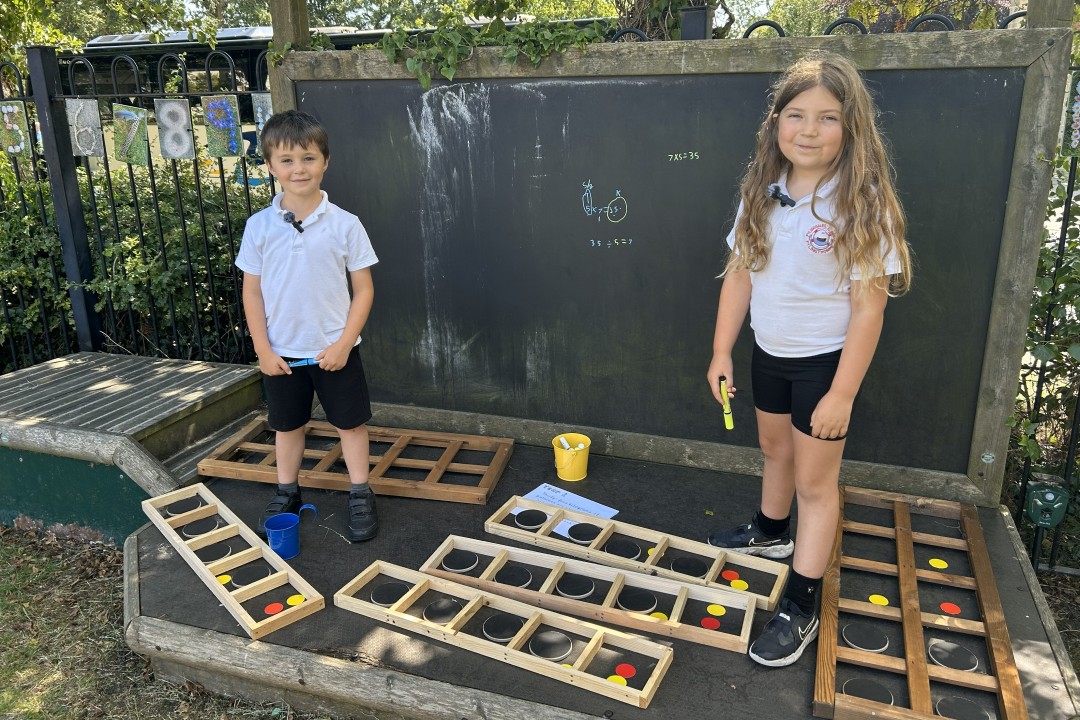
Helen shares that the use of large whiteboards has played an important role in this shift, freeing children to explore ideas, make mistakes and refine their thinking without fear.
‘We’ve seen a real change in how children talk about maths. Their fluency and depth of understanding have improved significantly, and they’re much more confident explaining their reasoning using mathematical vocabulary. Learning feels active now. Children are problem solving, exploring ideas and applying maths across the wider curriculum, not just in lessons.’
Careful planning and staff development
Teaching maths in mixed-age classes requires careful planning, flexibility and ongoing reflection. At Fylingdales, staff have worked collaboratively to plan with, trial and refine their use of the NCETM’s PD Materials before rolling them out more widely across the school.
Training additional adults has been a priority, ensuring that teaching assistants understand the rationale behind teaching for mastery and use consistent language and approaches. This shared understanding has helped create coherence across lessons and provision.
Time for professional dialogue has been protected through staff meetings, twilight sessions and inset days, allowing staff to revisit learning from training and make practical adjustments in the classroom.
Next steps
Following a successful trial in EY/KS1, the school is now preparing to roll out the teaching for mastery approach across the wider school and federation. Staff feel confident and motivated, with a shared understanding of expectations and how practice will look in different phases.
With strong foundations in place and continued support from the Maths Hub, leaders are focused on deepening practice and ensuring that the principles of teaching for mastery continue to shape maths learning across all year groups.
Discover mixed-age teaching for mastery
Find case studies, leadership insight videos and more on the mixed-age section of our website and see how schools like yours are making teaching for mastery work in mixed-age settings
Explore